
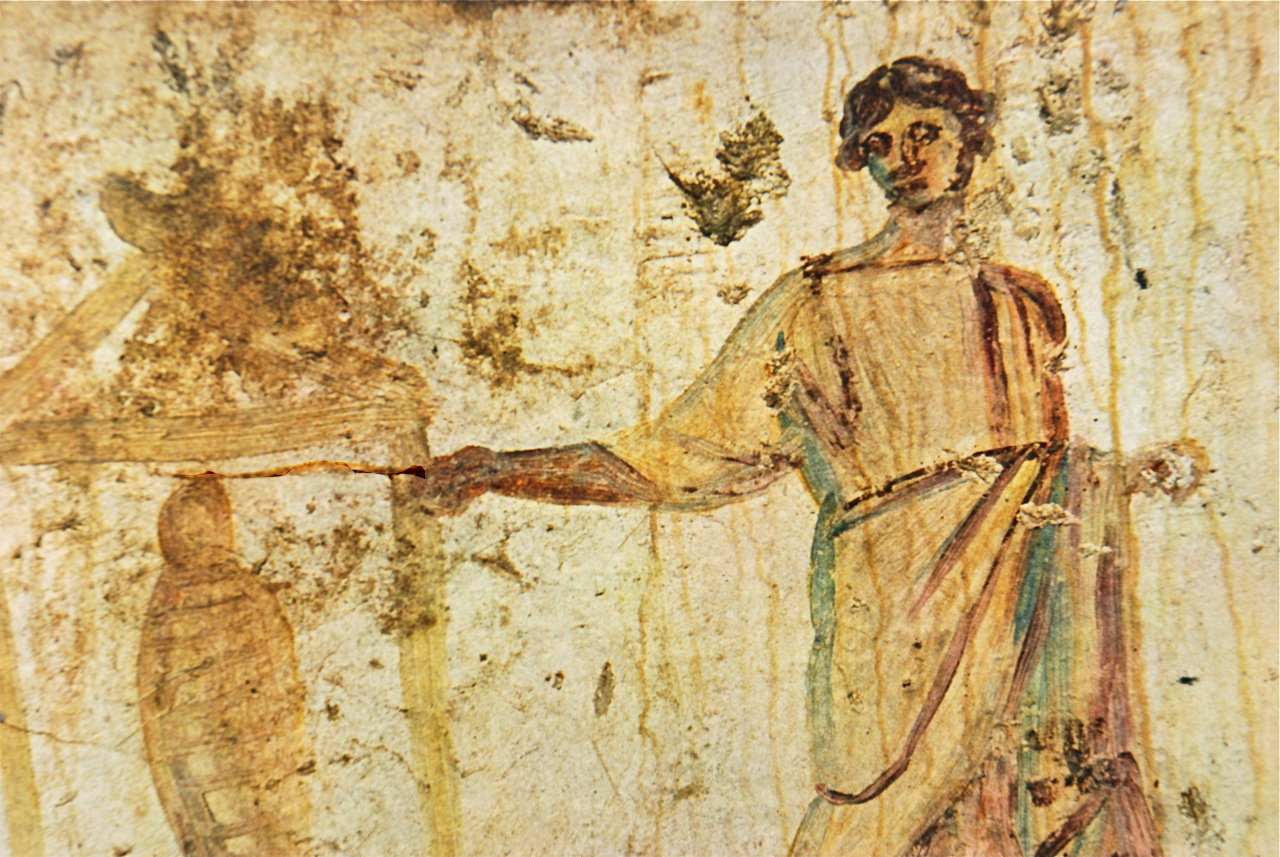
Jesus raising the dead with a wand,
Roman catacomb, 3rd century
“Magic” is not itself a magic word, but just a word to which people attach all sorts of meanings
and use to describe a full range of events ranging from the pleasantly unusual, romantic, and
gratifying …. through tricks of misdirection and manipulation …. all the way to remote sensing,
out-of-body travel, on-the-spot multiplication of loaves and fish, levitation, and what you will.
Faced with that confusion and my task as guest editor of a magazine issue with the theme of magic, I recalled right away the beginning words of that magical book, the original old testament of Jews and Christians, the very first words of which words say that in the beginning was the word. Some say the word was God, others Gog, or Dog, but the point is that the word was magic. The word created.
Words themselves were magic.
And they still are, or try to be, in prayer,
in poetry, and in cursing. Especially in lying.
It has become clear lately, that for most practical and political purposes if you repeat something three times, it becomes true.
Recent research shows the even more startling fact that placebos, when given to treat a disease, are around thirty percent effective, which is good for any medicine; but studies also show that placebos are e effective even if you know they are placebos. You may well help by wishing or praying to, and it may be important that a doctor hands you those sugar pills, but the more startling results of the study show that if not only do you have a good chance of a cure from a placebo even if you know it is just a sugar pill, but you also will get the negative side-effects of the medicine you know you are not really getting. I call THAT magic.
But I still do not understand it. Maybe magic is just the name for what we don’t understand.
So for me and other semi-literate civilians to get a hand on or our heads around that word, who better than word people like our chosen authors. Trust them, they are professionals, some with Doctorates. Trust them then to put magic into words, and believe them if you want to.
I myself, am an amateur and a child among words, so I will pass the task on to the more experienced writers we assemble here and now, before your very eyes.
Abracadabra.
Oren Pierce is the imaginary and pseudonymous
author of the Nowella and Threadbear
stories, as well as a Zen Badminton player
who instructs students to play with
their non dominant hand, and advocates
what he calls “Mindlesness”, or “Other Handedness”
in thought and activity.
(Return to Home Page Metaphysical Times)
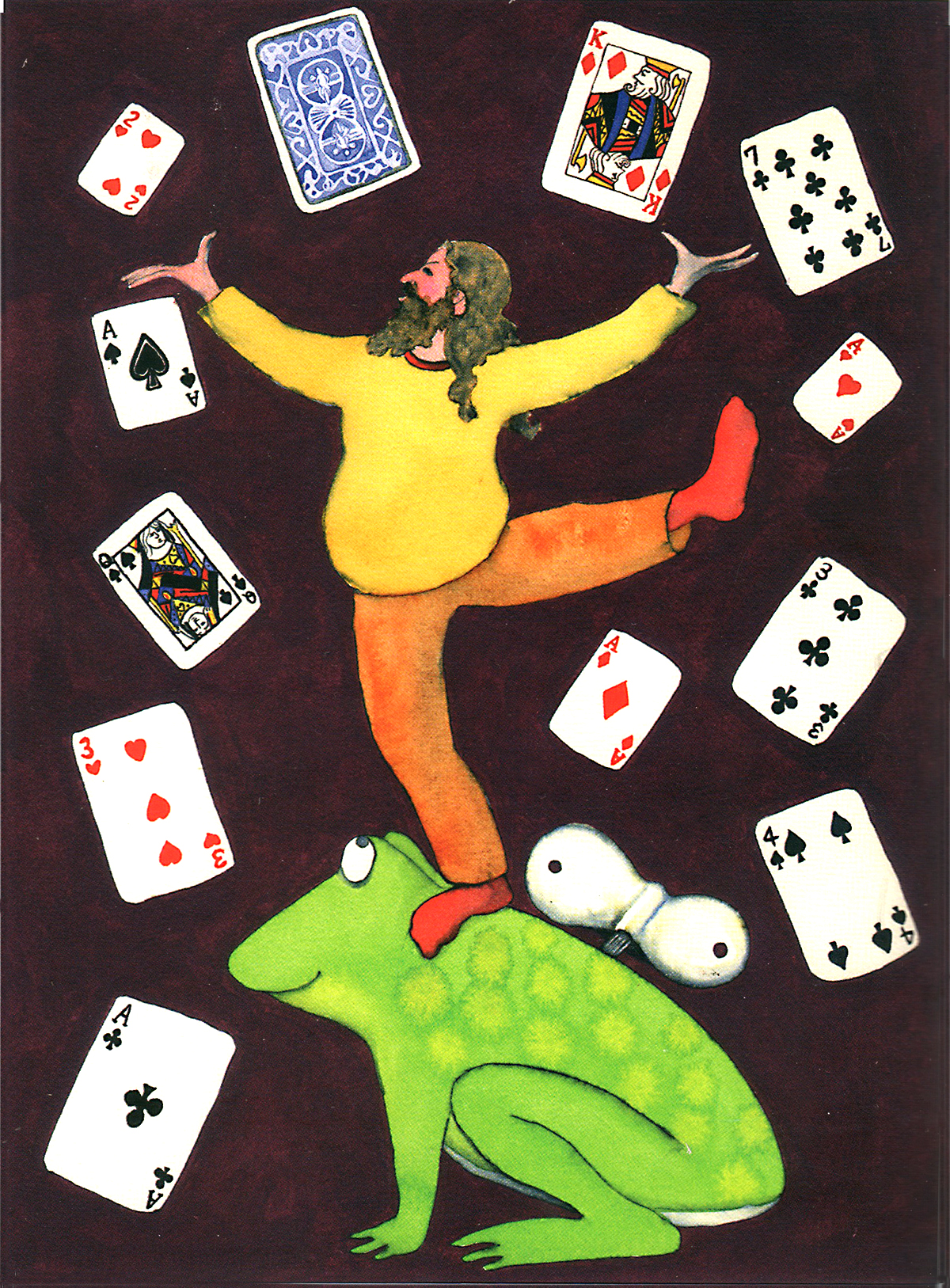
In the Cards
by Annie Cambell
I joined some old friends on a different paint crew. We usually ate lunch at Noyes Lodge: a big cafeteria on the Cornell Campus. During lunch one day, I was introduced to Ricky, an eccentric magician with devilish smiling eyes. He sat hunched over his food, complaining that life was “a beating” and that he had no place to live. He carried on a rapid discourse about life and magic while constantly flipping a quarter smoothly and expertly over and under his fingers. Sometimes the coin disappeared into thin air, sometimes he magically retrieved it behind my ear.
I imagined what fun it would be to have a magician around the house and said, “You can stay at my house if you don’t mind kids.”
“I hate kids,” Ricky cackled,
“but I would love to stay there."
(Go to Story)
